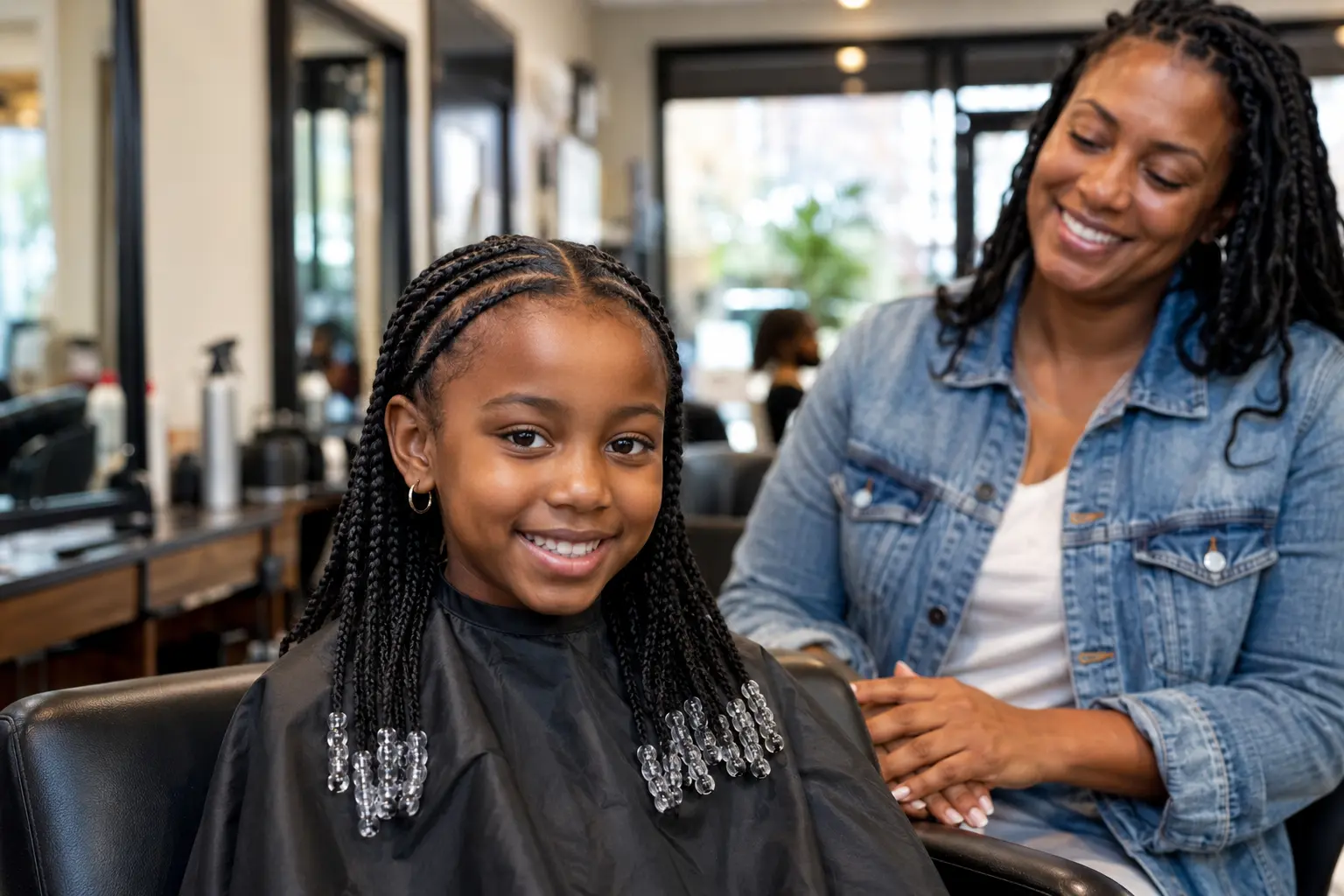
Consider age, patience, scalp sensitivity, school routine and daily activity. A simpler style completed comfortably is often a better experience than an intricate look requiring more chair time than the child can reasonably manage.
Prepare hair gently
Follow the confirmed cleansing, detangling and drying instructions. Detangle in sections and avoid rushing. Tell the stylist about sensitive areas, recent irritation or previous difficulty with tight styles.
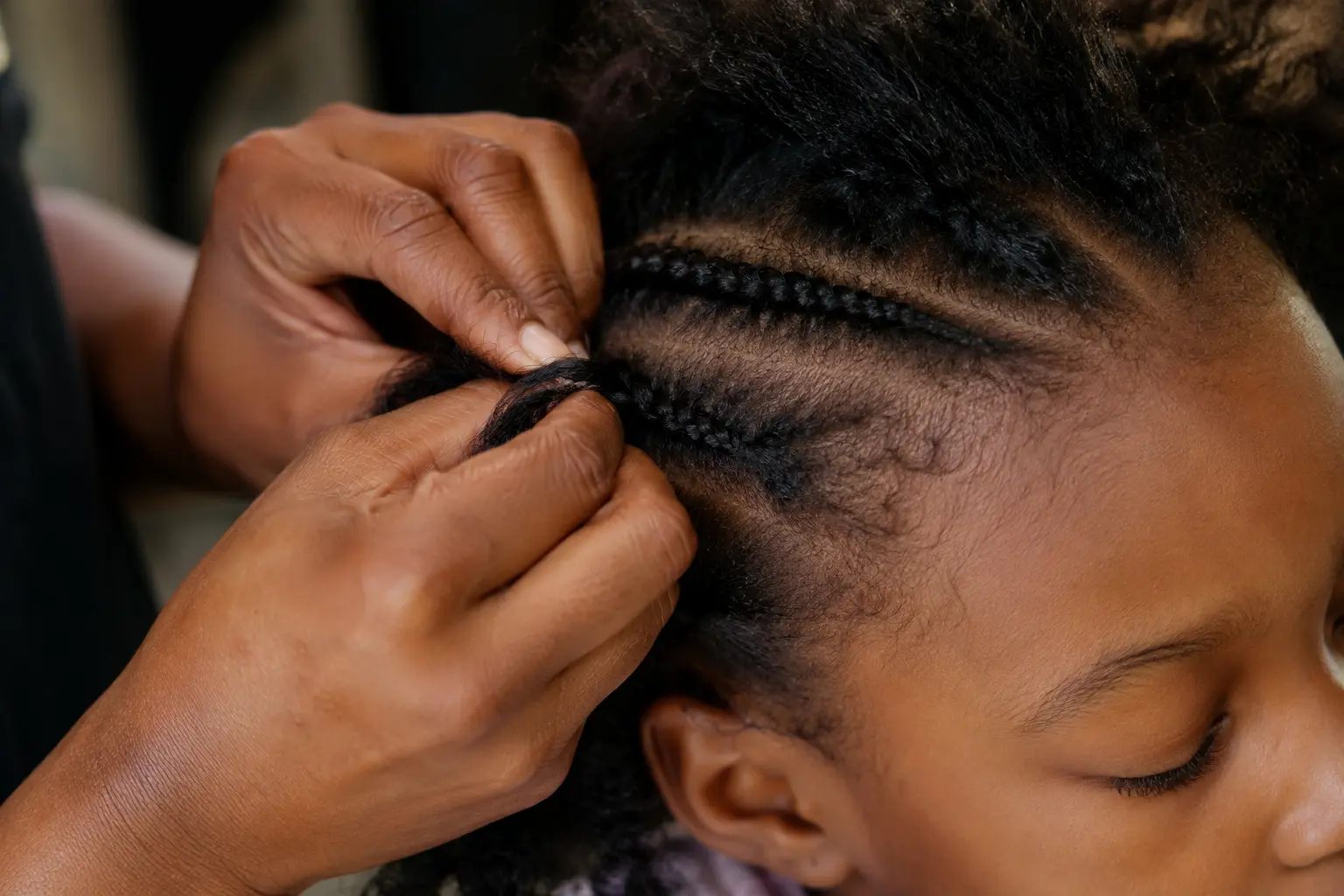
Set clear expectations
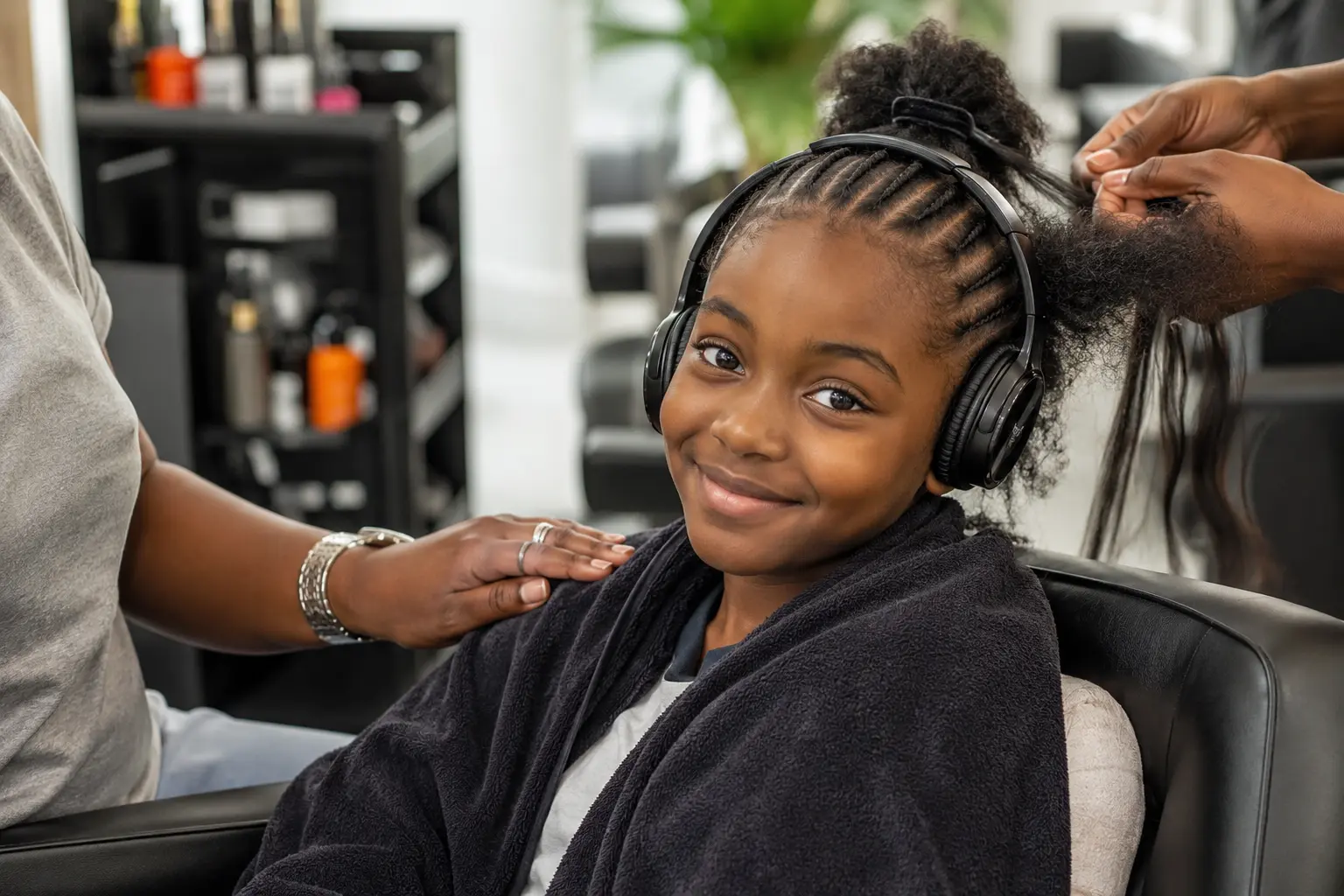
Explain the appointment in simple terms: there will be sitting, sectioning and short breaks. Bring a quiet activity, headphones or another approved comfort item. Avoid promising that the process will take only a few minutes.
Prioritize communication
Children should be encouraged to say when something hurts. Styling should not depend on ignoring persistent pain. A parent or guardian should communicate concerns promptly and respectfully.
Plan easy aftercare
Choose a style the household can protect at night and refresh without complicated daily manipulation. A satin bonnet or pillowcase and a simple routine are usually more sustainable.
For personalized styling guidance, discuss your hair, desired result and maintenance routine during consultation. Health concerns require assessment by an appropriate licensed professional.